Archives
Delivering Affordable Housing In The Heart Of Cork
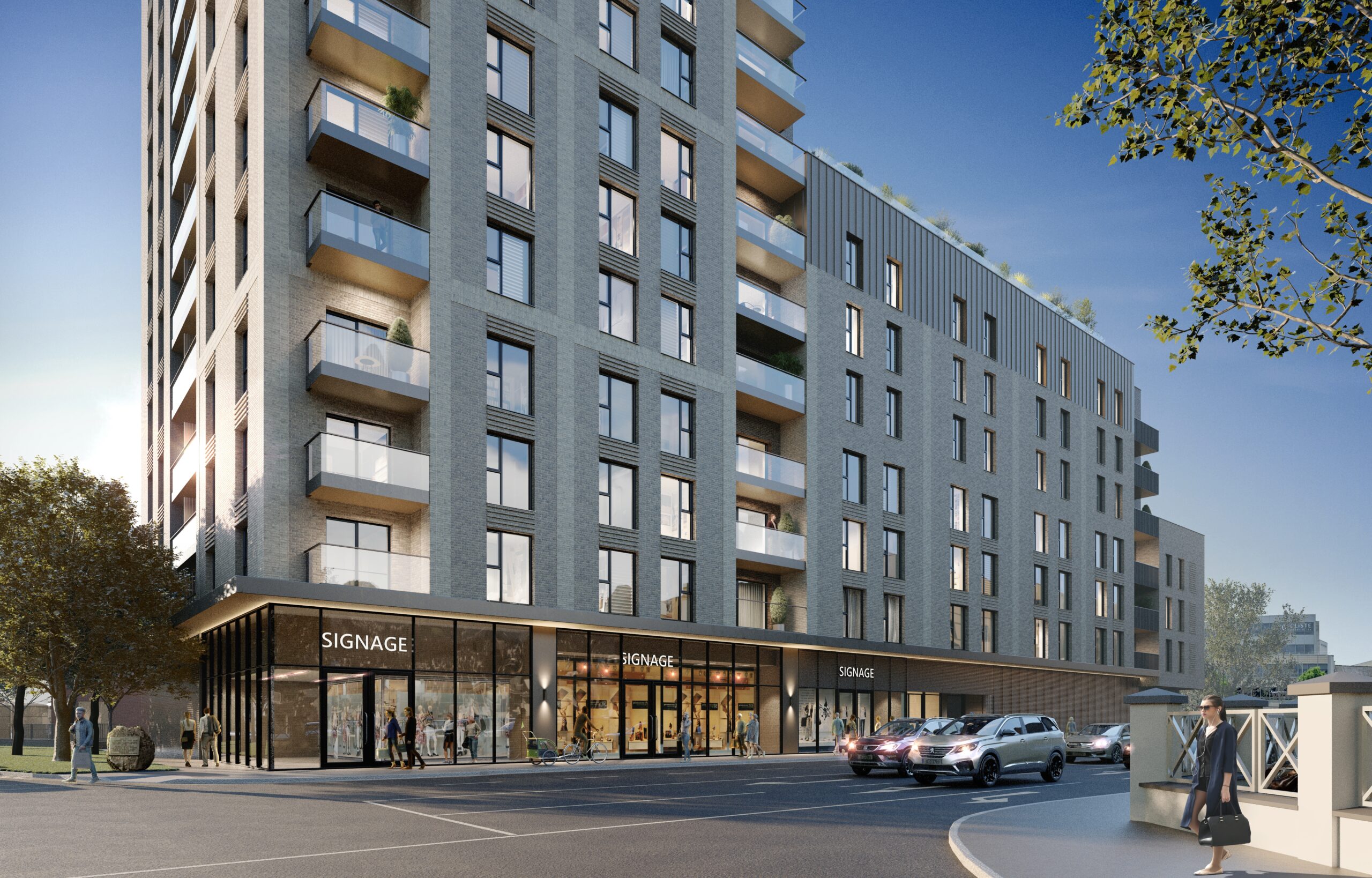
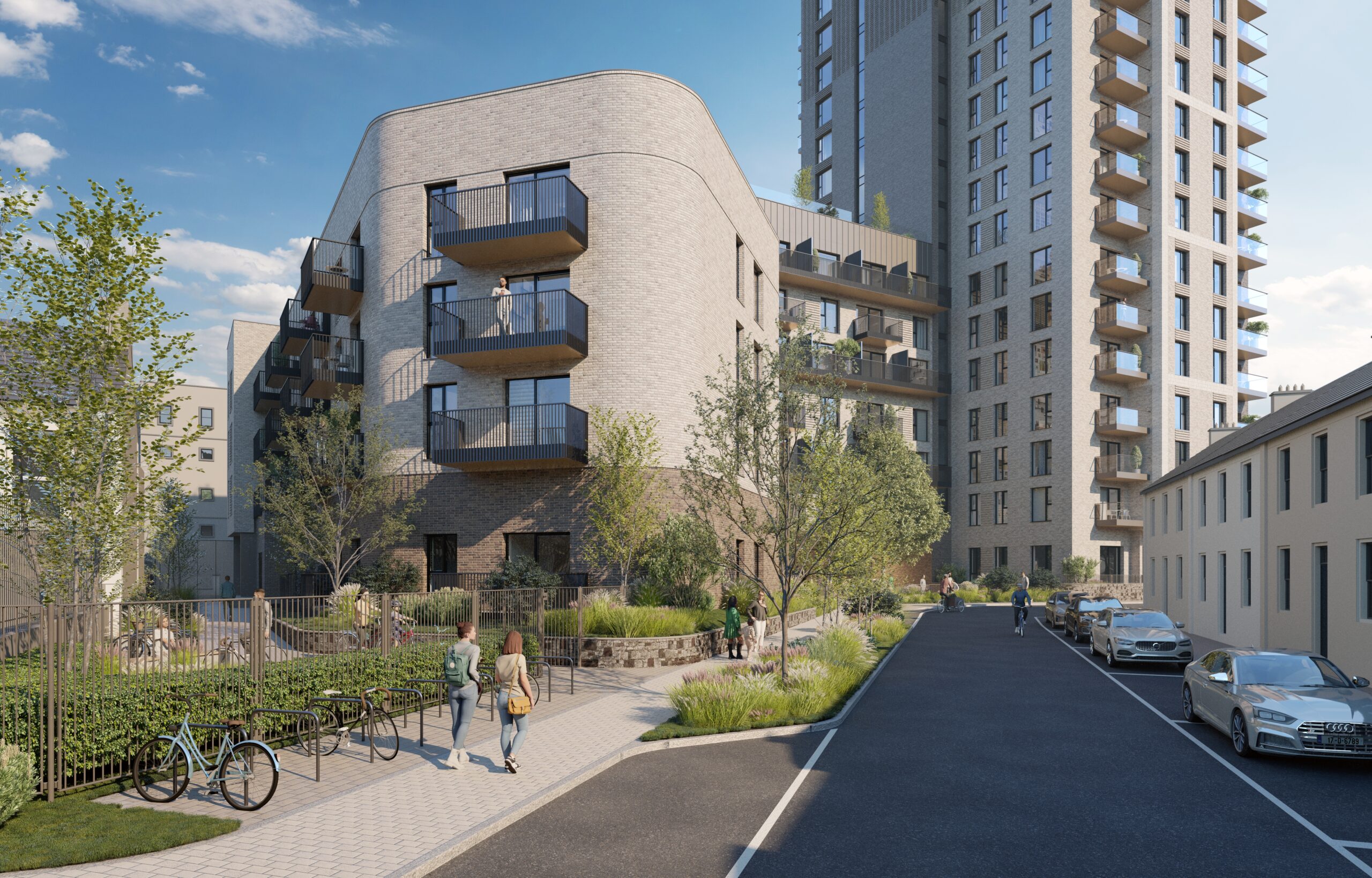
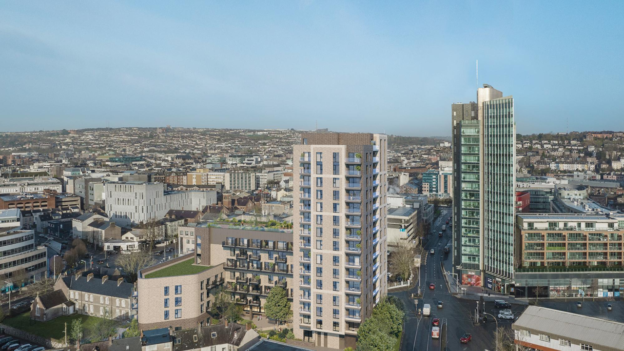
We are pleased to announce that the Anglesea Terrace Part 8 scheme in Cork was approved by Cork City Council last Monday. The scheme will deliver 147 cost-rental and social apartments in Cork city centre, making an important contribution to the provision of affordable housing in a highly accessible urban location.
The building steps up from four to 16 storeys, reinforcing the emerging cluster of taller buildings around the Elysian Tower at the entrance to Cork Docklands.
Urban Initiatives worked with Henry J Lyons Architects to shape the scheme’s response to this highly constrained site, which is wedged between several major road corridors, low-rise housing, and a listed building.
We also prepared the Urban Design and Tall Building Statement and the Visual Impact Study in support of the application, demonstrating the proposal’s significant and beneficial impact on the city’s skyline and its wider context.
For more information, please follow the link to the Building Ireland Magazine/

A Tribute To Kelvin Campbell
We are very saddened to learn of the passing of Kelvin Campbell, the founder and inspiring force behind Urban Initiatives. Kelvin established the practice with Chris Whyfe in 1989 and it was with his passion, drive and guidance that it grew into one of the most formidable urban design and planning practices in the UK.
Kelvin shaped Urban Initiatives through his vision and an ethos of genuine care for places and people. He believed in urbanism delivered through many small interventions – initiated, guided and structured by urbanists like him, bringing together a “top-down meets bottom-up” approach that helps shape successful places. This thinking was brought to life through his research and writing on Massive Small.
Kelvin was a great thinker and urbanist and also a generous collaborator. He always had time to mentor, guide and listen to more junior members of the team and had an incredible ability to simplify complex design challenges with a few simple moves of the pen. He was a wise man who could captivate an audience through his charismatic smile and story-telling but he could also be combative and was never shy to challenge the status quo.
His mantra in the office was to always see the bigger picture, think outside the box, and never stand still: to question, innovate, and keep learning. This will remain a grounding ethos of our work, and we feel humbled to carry forward his legacy.
His good friends Kobuz Mentz and Rob Cowan have written a wonderful tribute which is attached here
Kelvin has been a significant presence and inspiration in our professional and personal lives, and it is a profound shock to know he will not be with us any longer.
Our deepest condolences go to Kelvin’s wife Louise, his son Andrew and to his wider family.
Hugo Nowell & Matthias Wunderlich

Urban Flourishing: Join Thousands Shaping the Future of Great Places


Join Thousands Shaping the Future of Great Places
A new national conversation about the future of our places is gaining momentum across the UK. On Monday 29 September, Urban Flourishing officially launched The Great Places Conversation, inviting the public to share their views on what makes a place thrive and what holds it back. We also recently hosted our second stakeholder workshop, bringing together professionals from the built environment and education sectors to share updates on our progress and next steps. Click here to read the full report from the workshop and our early findings
In just over a month, we have attracted nearly 15,500 visitors to the website, with over 5,000 responses submitted. This level of engagement is a fantastic start, and it’s clear that people across the UK are eager to share their views on what makes places thrive. However, to drive meaningful change, we need even more voices to join the conversation. If you haven’t had the chance to have your voice heard on your place, community and environment have your say today!
Key Takeaways So Far
Early responses show that people deeply value access to nature, with greenery and natural features seen as essential to thriving places. However, concerns are growing around car-dominated environments, rising housing costs, and a lack of mental health support. Many feel that local decisions are made without truly listening to communities, and over 90% believe pollution is not being effectively managed.
Taking the Conversation Forward
Following the launch, Urban Initiatives’ Director, Hugo Nowell presented our early findings from The Great Places Conversation at the National Urban Design Group Conference on Thursday 2 October. The session brought together built environment professionals from across the country to reflect on the emerging data, share their expertise, and offer personal perspectives on the places they live and work.
We’ll continue to analyse responses and share updates as the conversation evolves.
In the meantime, we encourage everyone to keep spreading the word and inviting others to take part!

Urban Initiatives Spotlight: From Footbridges to Fingerprints – Nadya’s journey with Bridges to Prosperity in Rwanda
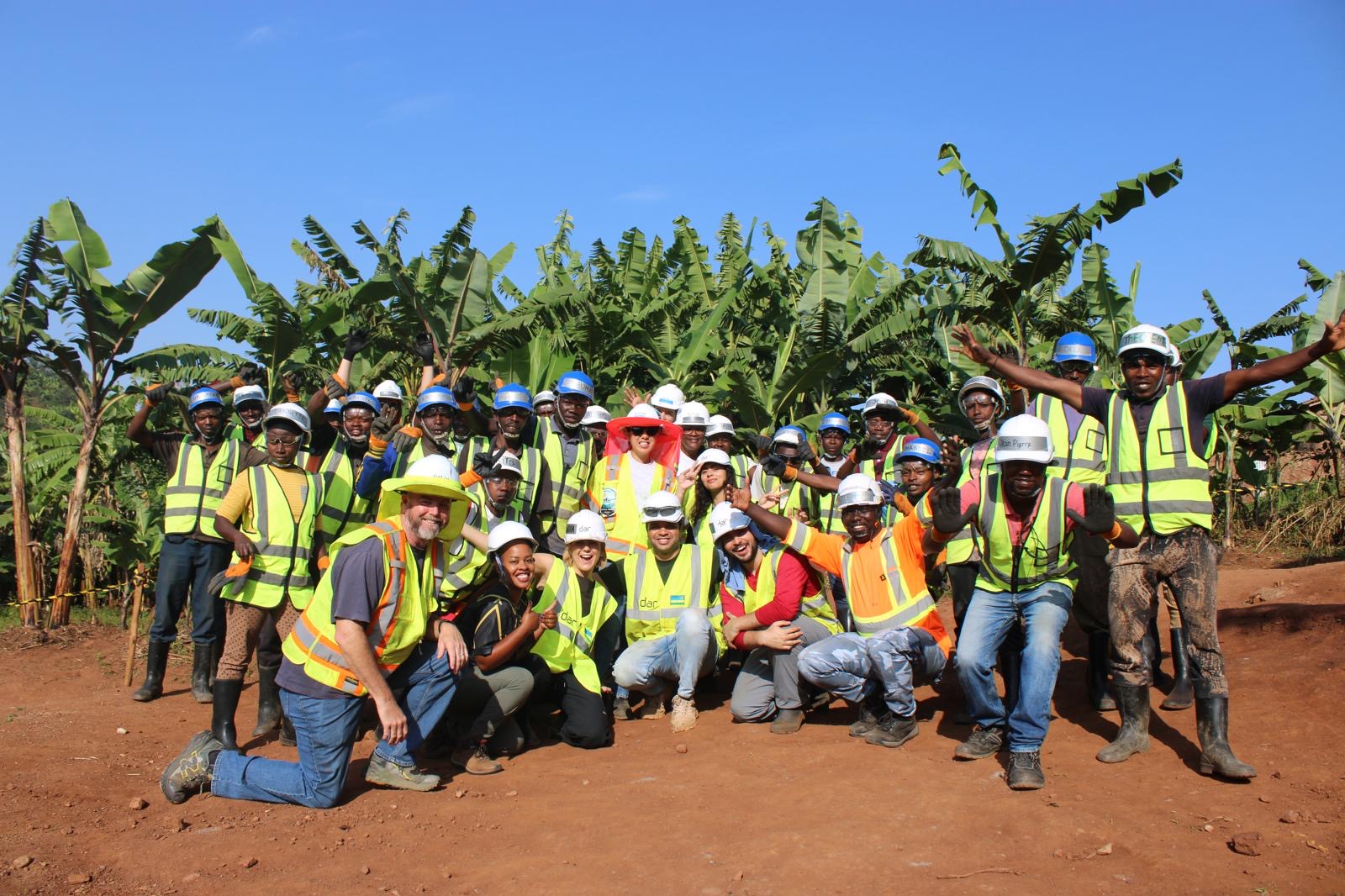
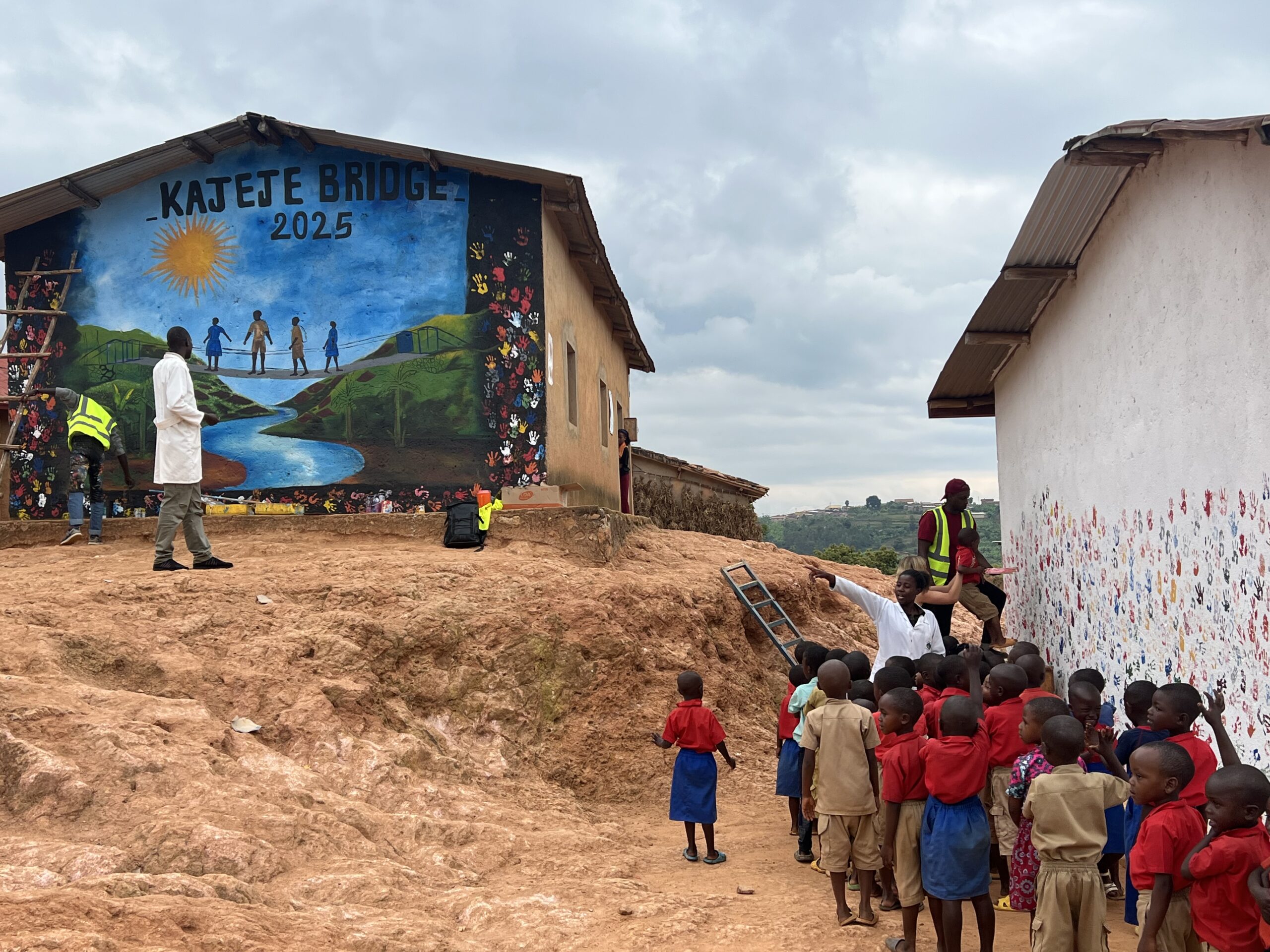
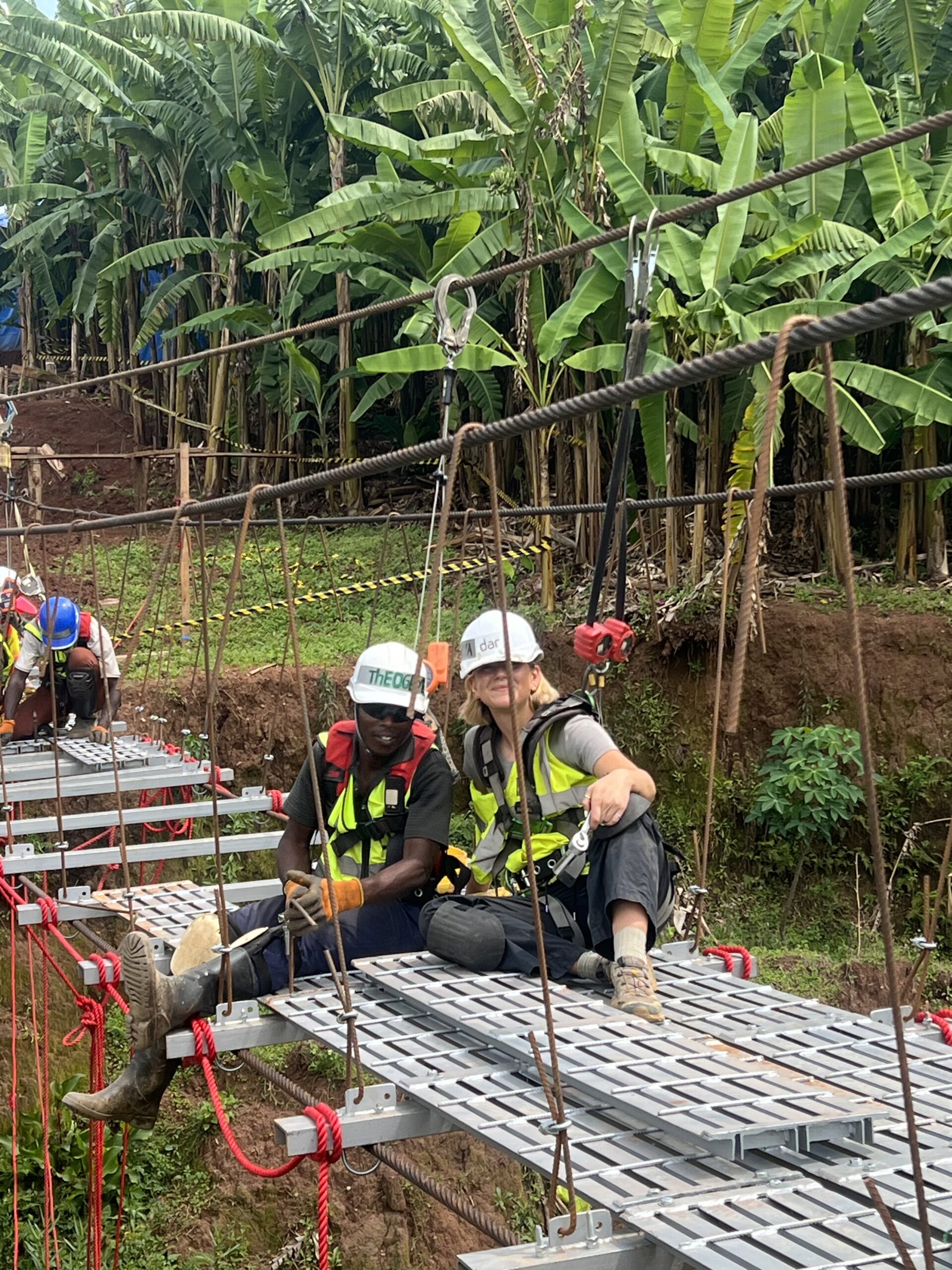
Last month, our team member Nadya volunteered as the Community Engagement Lead on the Bridges to Prosperity programme (Bridges to Prosperity: Rural Infrastructure De-velopment), contributing to the construction of a 45-metre suspended footbridge in Kajeje Village, Rwanda. Built alongside nine international volunteers from Sidara com-panies and over 30 local team members, the bridge now provides a safe, year-round crossing over the Bukaba River, ensuring children can access their school all year round.
As part of the project’s broader impact, Nadya led a community engagement initiative at Indashyikirwa za Busekera, the school closest to the bridge site. Partnering with Kigali-based artist Manzi Pascal of Imazi Arts Space and his colleague Kayiranga Shadrack, the team co-created a large-scale mural with local students. The artwork commemorates the new bridge and symbolises the opportunities it unlocks for the community. Every student was invited to contribute a handprint to the mural and so many participated, a second wall was needed to include them all!
The video below captures the community, including the local school, crossing the bridge for the first time during the bridge inauguration day celebrations.
We’re proud to support our team’s involvement in initiatives like this- projects that not only improve infrastructure but also empower communities and foster genuine, lasting engagement.
Well done to the 2025 Bridges to Prosperity team!

Strategic Green Belt release to intensify and enhance the sustainability of outer London boroughs


The Greater London Authority (GLA) has released Towards a New London Plan, outlining several significant policy directions that the Mayor intends to pursue in revising the London Plan.
One proposal that has attracted considerable media attention is the potential release of parts of the Green Belt to support much-needed housing delivery. Undertaking a Green Belt review and identifying ‘grey belt’ land for development is, in principle, a worthwhile strategy for addressing (in part) London’s housing crisis. However, the success of this approach will depend critically on how it is implemented, and how it is communicated to the public.
This strategy will fail if it results, as it has in many other places, in a series of poorly planned greenfield housing developments that do little to address the fragmentation of the urban fabric or the car dependency of communities in outer boroughs. Instead, it must be taken as an opportunity to restructure, intensify, and improve outer London, as part of a polycentric city model, delivering a mix of housing at sensible densities that support public transport and the local economy.
New development should ensure active travel and public transport access to local and district centres, employment opportunities, and essential services and infrastructure. Equally important is creating a stronger, more meaningful relationship with the countryside, improving access to greenspace, protecting sensitive landscapes and environmental assets, and delivering genuine biodiversity gains.
Crucially, improvements should not be limited to newly developed areas but should also benefit existing communities, enhancing the overall sustainability and quality of life in London’s outer boroughs.
Our mapping of London’s Green Belt suggests there are approximately 25,000 hectares of Green Belt land that are unaffected by nature conservation, flood risk, or other significant constraints. Of this, around 5,500 hectares lie within walking or easy cycling distance of existing rail or underground stations. If only half of this land were developed at modest densities, it could yield approximately 140,000 new homes.
If we expand the catchment to areas within 2,500 metres of a station – a distance easily covered by bus or bicycle in under 15 minutes, this would encompass a staggering 17,000 hectares. If just half of this land were allocated for housing, it could deliver around 425,000 homes, located close to existing transport infrastructure. This would deliver approximately half of London’s projected housing demand.
Of course, this is a broad-brush analysis, and a detailed strategic planning and Green Belt review would be required to identify the areas most suitable for release and where they could also deliver wider regenerative benefits to outer London communities. Nonetheless, this analysis highlights the significant potential to address London’s housing needs by considering selective, sustainable Green Belt release, while also leveraging investment into the outer boroughs.

At Urban Initiatives, we have long explored opportunities for growth and character-sensitive intensification, including in areas that may be considered for Green Belt release. Our project Heathrow Gateway, focused on the west of the London borough of Hounslow and their vision for deliberately targeted fragmented Green Belt land to deliver a new mixed-use airport city supporting Heathrow, a new industrial park for distribution and airport-related businesses near Hatton Cross, and a new urban neighbourhood fronting onto Bedfont Lakes Country Park. This could deliver up to 5,000 new homes, a mixed use district centre and create 13,000 new jobs. The proposal included a potential new rail link from the Feltham into the airport, as well as new pedestrian and cycle connections to serve the existing community, reducing car dependency and improving access to local centres, employment, and green spaces for both existing and new residents. This vision demonstrated the potential to deliver significant benefits for the local community: essential new homes, economic growth, and the enhancement of green infrastructure.
We welcome the new direction from City Hall and will contribute our expertise to the upcoming consultation on the next London Plan.
Written by Urban Initiatives Director, Matthias Wunderlich

Urban Initiatives joins the Bridges to Prosperity Programme


In just over a month, our colleague Nadya will be heading to Rwanda to take on the role of Community Engagement Lead as part of the two-week Bridges to Prosperity programme. Nadya will join a team of 10 volunteers from across Sidara companies, travelling to the Muhanga District to help build the Kajeje Trail Bridge – a 45-metre suspension bridge that will connect over 4,000 residents to vital resources.
This is one of the many bridges Bridges to Prosperity are building to end rural isolation. These photos show the opening ceremony of last year’s bridge, with an update on the 2025 build to follow in June.
Find out more about their incredible work here: Bridges to Prosperity: Rural Infrastructure Development

Launch of the Urban Flourishing Initiative

Urban Initiatives are proud to announce the launch of the ‘Urban Flourishing Initiative’, a collaborative partnership with The London Collective, Demos and E.C.F.
Together, we are developing a ‘systems-thinking’ framework that responds to the social and environmental challenges shaping our cities today.
Our partnership brings together multi-disciplinary expertise across academia, industry and public engagement, with the goal of influencing how cities can adapt and thrive in the face of these challenges. By combining evidence-based research with meaningful community input, we aim to create a framework for resilient and future-ready urban development.
We’re excited to begin this project and look forward to sharing our progress as the project evolves.

Urban Initiatives collaborates with Sevenoaks Town Council to develop two masterplans


Over the past year, Urban Initiatives has been working in close partnership with Sevenoaks Town Council to develop two masterplans: one for the Town Centre and another for the St John’s Hill area, located just north of the town centre. These plans aim to integrate new and existing buildings while enhancing public spaces and connections, creating a vibrant, pedestrian-friendly environment that supports community life and promotes healthier lifestyles. Improved links between key town assets will also encourage longer visits and attract future investment.
The masterplans have been shaped in collaboration with the local community through a series of in-person and online workshops and engagement events. These sessions helped establish core design principles to guide the plans and ensure they reflect the needs and aspirations of local residents. Sevenoaks Town Council is now consulting on the Draft Masterplans. A consultation event for the St John’s Hill area was held on 17 March 2025, with the relevant documents advertised on the Town Council’s webpage: https://www.sevenoakstown.gov.uk/. Consultation for the Sevenoaks Town Centre Masterplan is scheduled to take place in June

Urban Initiatives Advances Major Urban Expansion Project in Peru


Urban Initiatives Advances Major Urban Expansion Project in Peru
In March 2025, Urban Initiatives Director Matthias Wunderlich travelled to Lima, Peru, to re-engage with our pioneering 2014 Masterplan for an 800-hectare urban expansion south of the capital. Initial site preparation has taken place and momentum is building as the project moves into the next phase.
Urban Initiatives has been commissioned to lead a comprehensive market study, feasibility analysis, and masterplan review to unlock the site’s potential and guide strategic development. During his visit, Matthias met with senior representatives from Lima City Hall and the national investment agency PROINVERSIÓN to align on project priorities and opportunities for collaboration.
Urban Initiatives is proud to be expanding its international footprint – stay tuned for more updates as the project develops!

Railyard Apartments Obtain Planning Permission


Urban Initiatives are delighted to announce that the elected members of Cork City Council unanimously approved the Part 8 planning process for the Railyard Apartments. The 217 cost-rental apartment scheme on Albert Quay in Cork comprises a mix of studio, 1, 2, and 3-bedroom units, with 40-50 units designed specifically for older people and those with disabilities. The 25-storey building will be the tallest to be constructed in Cork City Centre and will serve as a landmark and beacon for the expansion of the city into the Cork Docklands. The adjoining listed former Blackrock and Passage Railway station will be converted into a restaurant and office, and a series of green courtyards will bring people in and through the scheme. Urban Initiatives supported JCD Group, Henry J Lyons Architects, and the wider team with the design of this proposal and prepared the urban design and tall building statement, as well as the visual impact assessment for the application. Construction is set to start next year.